Info on the Chevy Volt’s Safety Enhancements
January 5, 2012 by admin
Filed under Chevy Volt, GM

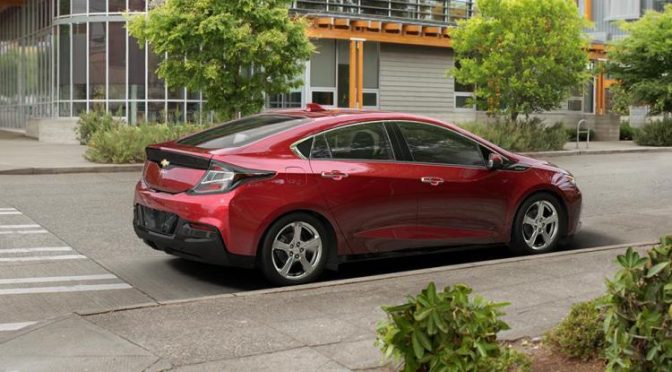
Changes follow NHTSA investigation into post-severe crash battery performance2012-01-05WARREN, Mich. – General Motors today announced enhancements to the vehicle structure and battery coolant system in the Chevrolet Volt that would further protect the battery from the possibility of an electrical fire occurring days or weeks after a severe crash.
The enhancements come in response to a National Highway Traffic Safety Administration Preliminary Evaluation to examine post-severe crash battery performance.
NHTSA opened its Preliminary Evaluation on Nov. 25 following a severe-impact lab test on a battery pack that resulted in an electrical fire six days later. The test was conducted to reproduce a coolant leak that occurred in a full-scale vehicle crash test last May that resulted in an electrical fire three weeks later.
The Volt is a Top Safety Pick by the Insurance Institute for Highway Safety and has earned other safety awards from key third-party organizations. Through the first 11 months of 2011, Volt owners accumulated nearly 20 million miles without an incident similar to the results in the NHTSA tests.
“The Volt has always been safe to drive. Now, we will go the extra mile to ensure our customers’ peace of mind in the days and weeks following a severe crash,” said Mary Barra, GM senior vice president of Global Product Development.
GM will conduct a Customer Satisfaction Program to further protect the Volt battery from the possibility of an electrical fire occurring days or weeks after a severe side crash. Modifications will:
Strengthen an existing portion of the Volt’s vehicle safety structure to further protect the battery pack in a severe side collision.
Add a sensor in the reservoir of the battery coolant system to monitor coolant levels.
Add a tamper-resistant bracket to the top of the battery coolant reservoir to help prevent potential coolant overfill.
GM conducted four successful crash tests between Dec. 9 and 21 of Volts with the structural enhancement. The enhancement performed as intended. There was no intrusion into the battery pack and no coolant leakage in any of the tests.
“These enhancements and modifications will address the concerns raised by the severe crash tests,” Barra said. “There are no changes to the Volt battery pack or cell chemistry as a result of these actions. We have tested the Volt’s battery system for more than 285,000 hours, or 25 years, of operation. We’re as confident as ever that the cell design is among the safest on the market.”
Volt customers will be individually notified when the modifications are available for their vehicles. The enhancements are being incorporated into the Volt manufacturing process as production resumes this month.
“We’re focused on one thing right now: doing what’s right by our customers,” said GM North America President Mark Reuss. “We’ll live up to our commitment to make sure our customers are delighted with their purchase.”
Vehicle electrification technologies are important to future of the automotive industry, which is why GM will continue its leadership role in helping the Society of Automotive Engineers develop standards that will help tow truck operators, salvage yards and vehicle recyclers in the proper handling of electric vehicle components. GM will help develop educational materials that can be used by these stakeholders in the future.
General Motors Co. (NYSE:GM, TSX: GMM) and its partners produce vehicles in 30 countries, and the company has leadership positions in the world’s largest and fastest-growing automotive markets. GM’s brands include Chevrolet and Cadillac, as well as Baojun, Buick, GMC, Holden, Isuzu, Jiefang, Opel, Vauxhall and Wuling. More information on the company and its subsidiaries, including OnStar, a global leader in vehicle safety, security and information services, can be found at http://www.gm.com.

Electric Cars – The Future has Arrived!
January 24, 2011 by admin
Filed under Nissan Leaf, Vauxhall Flextreme
Electric cars. For years they’ve been a pipe dream; an experiment, something for Jeremy Clarkson to laugh at. By 2012 however, that could all change, with the imminent release of a couple of vehicles…
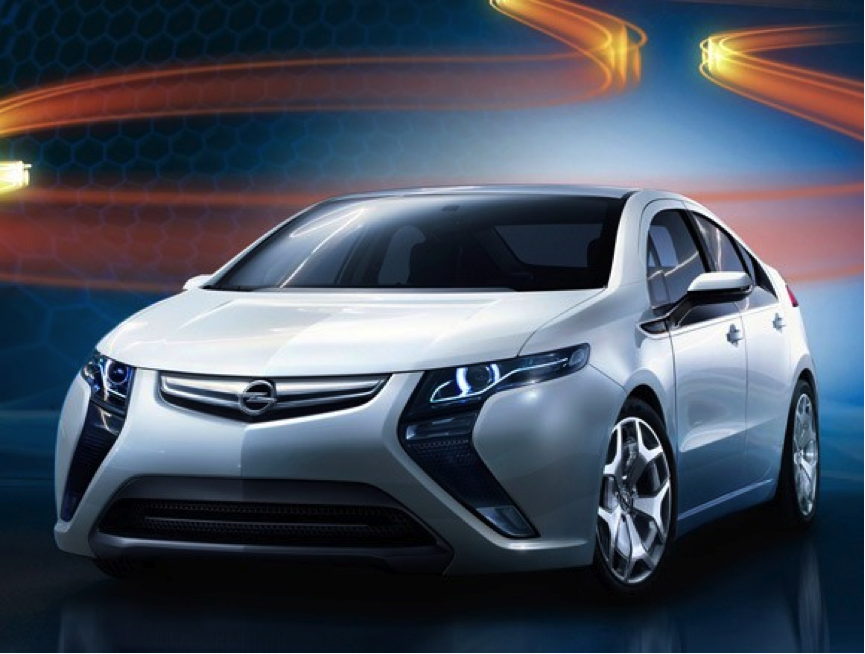
Earlier this year, Vauxhall offered its Ellesmere Port staff an opportunity to see the new hybrid car, the Ampera, ahead of it going into mass production, and Nissan’s Leaf is being debuted in the US and Japan at time of writing.
When these vehicles hit these shores however, picking one up might well be worth the money if you’re looking to buy a new car: Nearly every single European country are offering to subsidise electric vehicles in some way or another, and they’re keen to try to tempt people to switch to a newer, more environmentally friendly vehicle, as the technology within them is likely to represent the way transport will be powered in the future – although admittedly not for some time yet.
By 2020, Nissan Motor Company estimate that no more than a tenth of the traffic worldwide will be electric powered – and even this paltry number is considered optimistic by many people within the industry, who think that electric vehicles are likely to be a niche product for the foreseeable future as the general public refuses to change. Nissan are very keen to focus on the upsides of hybrid and electric vehicles however; when asked about how far the Leaf can travel on a single charge (Otherwise known as range), spokesmen for the company focused on the fact that you would never need to travel to a petrol station instead of discussing the fact that with the aircon on, the Leaf can only be expected to do around 80 miles in motorway conditions. Vauxhall’s Ampera contains a small petrol motor that keeps the battery charged, and whilst this is not a completely emission free system, the amount of fuel (and the emissions produced) are miniscule compared to a standard petrol car.
The Ampera recently completed the longest journey in the UK by an electric car, making a 160 mile journey under its own power from Luton to Ellesmere Port.
So where is electric motoring going in the future? Right now, it’s very difficult to predict. Electric cars are only just now starting to be seen as a credible alternative to “old-fashioned” petrol propelled vehicles, especially as anything more than a city runabout. Part of the reason the adoption rate has been quite low is the fact that every element of motoring would need to change to accommodate them – from car insurance to fuel, garages and car rental.
It is clear that electric cars are going to take some time to fit in, but one day electric vehicles will have to become a contender to petrol vehicles, and when they do it will be very interesting to see the changes they bring…
Pre-Production Chevy Volt Test Drive
September 3, 2009 by admin
Filed under Chevy Volt
This is a neat video of a pre-production Volt in action. You actually get a first-hand perspective of what it is like to ride in this range extended plug-in electric vehicle. The car is basically complete, with a working LCD screen in the dash. The passengers note that the car does have a good amount of pep; the 100% torque of the electric engine should provide competitive acceleration. The car is also whisper quiet of course. See and hear for yourself:
GM’s 230 MPG Volt Campaign
September 2, 2009 by admin
Filed under Chevy Volt

I watch YouTube more than I care to admit. Last week I noticed a mystifying advertisement before many of the videos: A green screen with a large number 230, with the 0 depicted as a winking standard electrical wall outlet, and a smaller date 8-11 underneath. Since I had no idea what the numbers meant, I Googled them to no avail. Eventually, I discovered that this was a GM marketing campaign for the Volt. But how did the number 230 come into play? Does is stand for 230 volt outlet required? The number of days before GM declares bankruptcy again?
Finally, GM revealed on August 11th, 2009, that 230 was the official MPG rating given by the EPA. The advertisements now link to Chevy’s Official Volt page. While I was disappointed in the general lack of content on the actual page, the bottom corner provided a real gem of a link: Chevy Volt’s Facebook page. Those who do not know much about Facebook should know that people, places, events, and even inanimate objects such as the Chevy Volt can have their own Facebook pages now. The Chevy Volt Facebook Wall actually has a death of information on the Volt. People are free to voice their concerns and a Chevy spokesman tries his darndest to answer them all. Here is the spokesperson’s explanation of where they got the number 230.
It’s based on draft EPA fuel economy methodology, which takes into account thousands of drive patterns over an extended period of time. For example, some people will never use a drop of gasoline as they will always stay within the 40 mile pure electric range, while others will use a combination of pure electricity and engine-generated electricity when driving, and still others may stay within the 40 miles and just drive innefficiently. The assumption is most Volt owners will plug-in daily, so there has to be some common ground to compare vehicles between nothing and infinity. To rationalize all these scenarios and situations, the EPA’s draft methodology calculates this via mpg and our estimates based on that methodology are at least 230 mpg in city driving. Just as important, we are expecting the Volt to get more than 100 mpg combined (city/hwy). Also, we have not announced the charge sustaining mode mpg yet because we’re still testing and validating that mode of operation. -Phil
Originally, I was very disappointed in this ad campaign. All this build up around an arbitrary number and it all leads to a very plain, uninspiring website with a bunch of arbitrary numbers being crunched to explain where 230 MPG comes from.
It is crucial to convey what exactly the car does, and how the car is capable of your daily commute without needing a single drop of gas. I’ve witnessed first hand that the general public does not fully understand how plug-in hybrids work. One of my colleagues at work, an educated twenty something year-old, said he wasn’t a fan of the Chevy Volt because he thought it just died after 40 miles of electric driving. This was disconcerting, especially because we worked for an environmental activism group. I would have expected him to know how a breakthrough hybrid vehicle such as the Volt switches on an electric generator, when the battery is low. But not everybody has researched this. Therefore, simplifying this plug-in hybrid system to an arbitrary number, 230 MPG, might actually be the best way to communicate to the masses how such an unfamiliar vehicle operates.
So my final summation on the campaign is that Chevy did a good job simplifying and minimizing the dangers of bringing something unfamiliar to the market. Next, I would suggest some good old fashioned car advertising. Show it driving up a hill or blasting past a Mazda.
Chevy’s slick video on how the Volt works
November 30, 2008 by admin
Filed under Chevy Volt
This video shows how the Chevy Volt’s system charges, operates, and how the range extender kicks in to sustain the battery’s life for a few hundred more miles
Production Chevy Volt Revealed
September 16, 2008 by admin
Filed under Chevy Volt


Pictures courtesy of Autobloggreen.com
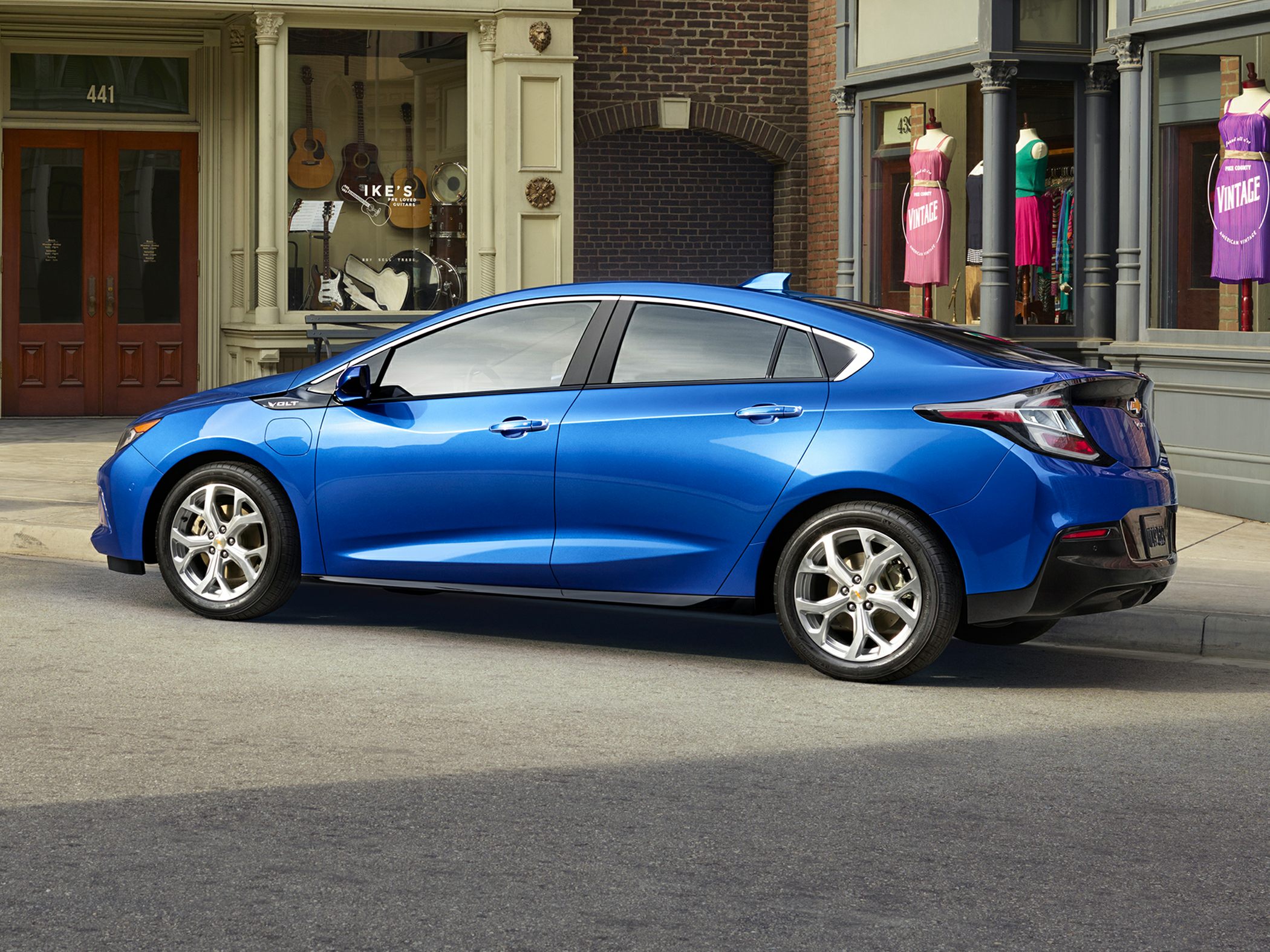
Featuring snazzily dressed Chevy executives. But I must say, they are right on the money with this design. Chevy did away with the sharp corners and the awkward plastic moldings around the windows; and they are obviously targeting the Toyota Prius market as a gas saving, compact family sedan. They could have gone the other way with this, as an edgy electric sports car, but it would have been a bit ego heavy, and not broadly appealing. Another major carmaker, Honda, is following this strategy as their upcoming 2010 hybrid is even more of a knockoff of the successful Prius. The Chevy Volt is tentatively scheduled to release in 2011