Tesla’s Fast Charging Stations: Game Changer or Fast Path to Bankruptcy?
December 27, 2012 by admin
Filed under Model S, Tesla Motors

Earlier this year, Elon Musk announced his plan to build solar powered, fast charging stations across America, available to Tesla Model S owners to use for free. A lot of my colleagues were very excited about this prospective announcement. To me, it seems downright impossible: high fixed capital costs, and no revenue from the stations. Additionally, these charging stations aren’t even compatible with Tesla’s other model, the Roadster, and you can forget about cross manufacturer compatibility. Solar panels are not just plug and play either, they require maintenance and cleaning if you want them to perform up to their specified manufacturer standards of efficiency.
Even if the solar panels operate at optimal efficiency, the fast chargers will draw more power than the solar panels can produce at one time, so unless Tesla has on-site electricity storage, the company will have to buy electricity at a higher rate than they can sell back to the grid.
Another challenge is the fact that utilities will often charge a hefty “demand charge” per month because of the high load these chargers can put on the grid, says Arindam Maitra, a senior project manager at the Electric Power Research Institute. Fast charger owners will have to pay that fee even if no one uses the station. At least one DC fast-charging system charges $7 per charge, which is more expensive than buying gasoline for the equivalent range in a conventional car. -Technologyreview.com
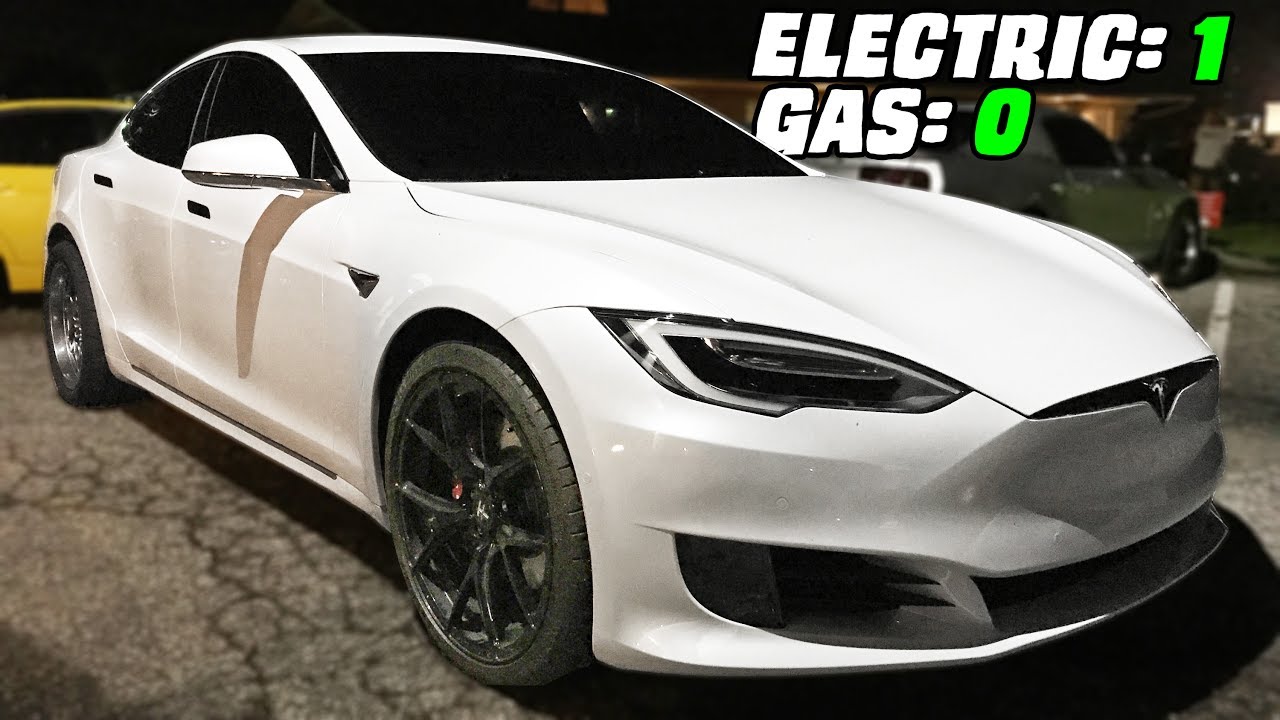
Despite the economic pitfalls, Tesla charged on this year. They built 6 charging stations in SoCal and have already begun their electric corridor in the northeast. The station pictured at the top is in Milford, Conn. Whether anyone has actually used it for its purpose remains to be seen. These stations will charge between 4 to 6 cars and the initial capital investment ranges from $100,000 to $250,000 This could be a substantial financial liability for Tesla, which has already announced that it needs to raise more money to keep operating. When you think about the infinitesimal amount of people that actually own the Model S currently, and then they have to be driving on that specific route, the logic seems ridiculous. Yet they are still building charging stations, and they need to sell a lot more cars for this plan to be remotely logical or we will get another Solyndra ordeal. Project Better Place seems to be turning in a bad direction in the final quarter of 2012, asking for emergency funding from investors and laying off hundreds of employees.

Fast charging is a great idea in theory. You can drive a few hours, stop, have lunch or stretch your legs and browse a shop, then get back on the road. Existing rest stops and commercial centers will see the value in drawing electric vehicle owners to their area for 30 minutes. Drivers can plug their car in for free, and businesses can lure in generally higher income patrons that buy electric vehicles. There is a possible business model to building fast charging stations that provide free or cheap electricity. However, that is not Tesla’s business model. They hope to increase the value a very expensive car by creating a free charging infrastructure for one specific model.
I just don’t think this type of widespread endeavor can possibly work, given that only one luxury model is compatible, and given that Tesla will not receive revenue to sustain the service. Provide me one example of a capital intensive, widespread, exclusive, free service that has worked in America. But this is what Elon Musk does: he creates things before we appear to need it (PayPal, SpaceX). I would like to be proven wrong. So if Elon or anyone has a brilliant defense of the plan, please feel free to discuss in the comments
Sources:
http://www.technologyreview.com/view/429348/teslas-fast-chargers-could-be-a-financial-liability/
http://wheels.blogs.nytimes.com/2012/12/21/tesla-begins-east-cost-fast-charging-corridor/
http://www.technologyreview.com/news/429283/will-fast-charging-make-electric-vehicles-practical/
http://www.motorauthority.com/news/1081336_teslas-supercharger-fast-chargers-spread-to-east-coast
http://www.motorauthority.com/news/1079383_tesla-supercharger-fast-charging-system-has-landed
Electric Vehicles Available Now
December 17, 2012 by admin
Filed under Ford Focus Electric, Mitsubishi iMiev, Model S, Nissan Leaf
Since 2008, we have been covering the electric vehicle market, and things have certainly changed since then. Back in the day, an electric vehicle startup, Tesla Motors, perked international interest with the Tesla Roadster. Then dozens of concepts, specialized automakers, and eletrofitters rolled in. I remember when it was only the little guys like ZAP, Think, Tesla, Zenn, etc. We’ve seen exotic supercars and concepts like the Eliica, Aptera, and Lightning GT, and low speed, neighborhood electric vehicles like the BG-100 and REVA. Some came to fruition, some did not. This international attention garnered the interested of the major automakers like Ford, GM, Nissan, and Mitsubishi. These majors not only created concepts, but have begun delivering electric vehicles in mass. Here are a few fully charged, highway capable 2012 models for the masses that you can order for delivery right now. In the US, these all qualify for a $7,500 federal tax credit.

The 2012 Ford Focus EV is one of my favorites because, from the outside, you can’t even tell that it is an EV. The Ford Focus EV is built on the same glider as the third generation ICE model. The EPA rated its range at 76 miles per charge and a fuel economy of 105 MPG equivalent. Production began in December 2011, in Wayne, Michigan.
I had a chance to drive the first model of the Mitsubishi i-MiEV at the 2010 New York Auto Show. I preferred it too the Mini-E, because it had more natural coasting and braking, and the battery was tucked under the carriage instead of being jammed in the back hatch area. On the Japanese test cycle, the vehicle has a 100 mile charge, but the EPA, the harsh critics they are, rated it at merely 62 miles. Over 20,000 of these little buggies have been sold worldwide. Prices vary widely regionally and so do tax incentives. In the Japanese market, the i-Miev is only $23,000 after subsidies, in Europe and the US it’s about $30,000, and $50,000 in Australia.

I have already spotted a few 2012 Nissan Leafs in the wild already. Although, I don’t know why so many people choose the seemingly trademark, “blue ocean” color. The EPA rated this hatchback at 73 miles-per-charge. After tax incentives in the US, the price is solidly below $30k at $27,000. Nissan is claiming an increase in range and a pretty significant decrease in price in the next model year.
We are all still wrapping our heads around a company from Palo Alto, California won the Motor Trend Car of the Year with the 2012 Tesla Model S. Not Detroit, Japan, or Germany, but essentially a company founded by a guy who made his first millions from PayPal. The award really means something though: that technology, innovation, and thinking outside the box in the automotive world can really evolve the industry in ways not possible through traditional thinking. Motor Trend states the $50,000 supercar (after US tax credits) “smoothly effortless as a Rolls-Royce, can carry almost as much stuff as a Chevy Equinox, and is more efficient than a Toyota Prius.” This simply was not possible before.
Tesla Model S: The Classes and Options
January 13, 2012 by admin
Filed under Model S, Tesla Motors

Tesla has become world renown for their superior performance electric vehicles. The Roadster put them on the map as the first production electric car that was actually refined, cool, and exciting. The heir to the awesome electric car throne, the Model S, will finally be delivered in 2012. The Model S sedan is targeted at electric vehicle fans with funds and maybe a couple kids. Remarkably, the base model will remain under their original target price of $50,000, at $49,900 after the $7,500 federal tax credit for electric vehicles purchased in or after 2010.
Tesla is providing a slew of classes and options for this electric sedan in hopes of capturing the absurdly rich and the upper middle class market share, so read closely. There are four classes of Model S: the Model S (plain, vanilla), the Model S Performance, the Model S Signature, and the Model S Signature Performance. On top of that, the plain Model S version has three, liquid cooled, lithium ion battery options, at 40, 60, and 85kWh. The other three classes (Performance, Signature, Signature Performance) all have the 85 kWh battery, standard, which pushes their ranges to a whopping 300 miles per charge. The 40 kWh option gives 160 miles and a 0-60 of 6.5 seconds, the 60 kWh battery puts out 230 miles and 5.9 seconds. The 85 Kwh pack gives you a 0-60 in 5.6. With the performance option that drops down to 4.4 seconds. The Signature label doesn’t necessarily enhance performance, but they are limited edition and available mid-2012, a few months earlier than the non-Signature class. They also carry about a $30,000-$50,000 premium over the base model.
All of the Model S classes will feature a 17-inch touch screen monitor which will contain media, GPS, and communications. The 200 watt stereo system will have radio, satellite radio, and USB ports. No CD player though, that’s so 20th century.

If you opt for the Signature series, you get the Tech Package standard, which includes xenon lights, keyless entry, LED foglamps, turn by turn navigation, power rear liftgate, back camera, rear USB ports, homelink, and electrochromatic side mirrors. A premium stereo system is also standard in the Signature class, and 1,000 bucks otherwise.
All Model S cars plug directly into 110 and 240 volt outlets with the Universal Mobile Connector and adapters. The High Power Wall Connector, which installs in your garage, enables cars equipped with Twin Chargers to charge twice as fast as cars equipped with a Single Charger. Cars equipped with a 60 or 85 kWh battery can use Tesla’s network of Supercharger stations.
Hope this helps clarify the many options and models of the Model S. For more information, visit Tesla’s Specifications page.
Oncars.com’s Sweet Model S Video Preview
OnCars.com has produced a very informative and stylish video preview of the Tesla Model S. It is split into three parts: Design, Pure Electric, and Showtime.
Part 1: Design
Franz Von Holzhouzen, Chief Designer of the Model S Project, and Elon Musk, CEO of Tesla Motors, provide an in-depth description of how the electric drive train allows for unique design opportunities. I was unaware that the battery pack flat between the wheelbase this time. The Tesla Roadster’s is a vertical box located in the rear portion of the car. Also, the Model S has many hidden design elements that reduce the drag coefficient, like the retractible door handles, flat underbody, and air diffusers.
Part 2: Pure Electric
Elon and Franz emphasize the importance of keeping the Model S purely electric as apposed to creating a hybrid sedan ala the Fisker Karma. With a 300 mile range, the Tesla Model S should have no trouble being a daily driver, and will hopefully extinguish any doubt in the minds of those who don’t believe electric cars are fully capable vehicles.
Part 3: Showtime
This covers Elon’s appearance on Letterman and reactions from New York City.
Video of Tesla Model S Unveiling and More
Edmunds Inside Line recently posted this neat video on Youtube. Not only do you get to see Tesla Motors finally pull the sheet off this gorgeous ride, but there is also some footage of the 7-passenger sedan in action on the road.
Full Details on Telsa Model S
Jalopnik has a great article on the Tesla Model S unveiling today. They also took several photos of the electric family sedan at the event. These are the most current car specs as well as production and release dates:
Via Jalopnik:
Tesla claims the Model S sedan will be produced at a rate of 20,000 units per year, with an expected 3rd quarter of 2011 start of production and an expectation of mid-2012 for when they hope to hit that 20,000-per-year number.
The Tesla Model S Sedan will supposedly have a 300 mile range from its floor pan-located, easily removable battery pack which Tesla claims will have a quick-charged capability allowing it to partially charge in just 45 minutes. The company is considering renting customers a long range battery pack for long trips. The regular batteries are available for lease and are expected to last from 7 to 10 years depending on use, but expect closer to 10 for normal use. The entire car will be covered under a warranty, the length of which is expected to be between 3 and 4 years.
The interior features 2 LCD screens, one displaying the gauges and one mounted centrally featuring a full touch screen.
Sport and AWD models are being planned, but the stock model can run 0-60 MPH in 5.5 seconds using its single-speed transmission.
The Tesla Model S will be built in Southern California, while the drive train is manufactured in San Jose. Although we initially believed they might be using a Mercedes platform, but we’re now told personally by Tesla’s Elon Musk the platform is their own design and they plan on manufacturing it themselves. Where they’ll come up with the tens if not hundreds of millions of dollars necessary to accomplish that is anyone’s guess.